Pronation vs Neutral Running Shoes – What Does It Really Mean Today?
January 14, 2026
Gone are the days when choosing running shoes was as simple as, “You pronate, so you need stability.” Modern footwear design and podiatry research have evolved, and so has our understanding of how your feet move. At Peak Podiatry, we see runners every day who’ve been told to “correct” pronation, but the truth is, pronation isn’t a flaw. It’s a natural and essential part of how the body absorbs shock, maintains balance, and adapts to the ground.
So, What Exactly Is Pronation?
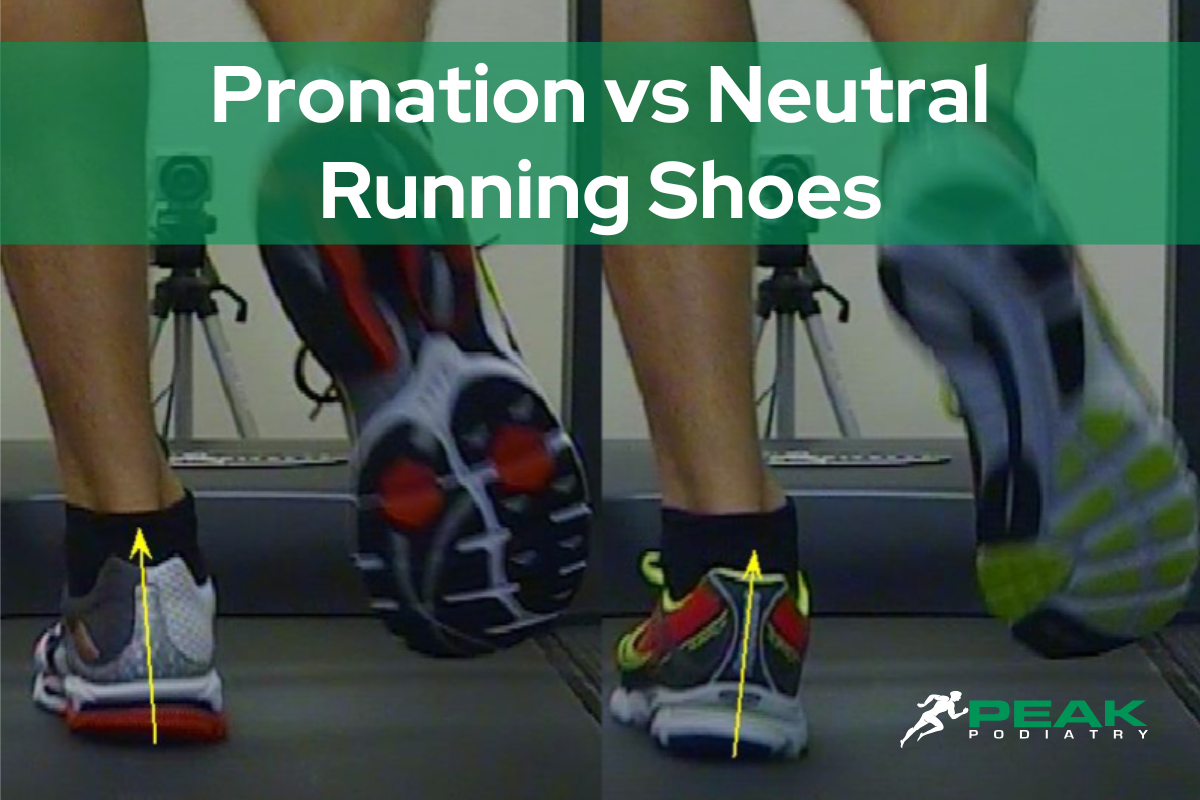
Pronation refers to the inward roll of the foot as it lands during walking or running. Everyone pronates to some degree. It’s part of your body’s built-in shock absorption system. The problem isn’t pronation itself, but when there’s too much or too little, or when the muscles and joints that control it aren’t functioning efficiently. Excessive or poorly controlled pronation can contribute to issues like heel pain, shin splints, knee discomfort, or Achilles overload. These are often the result of how your body manages movement, not just what shoes you wear.
Neutral vs Stability Shoes, What’s the Real Difference?
In the past, footwear was prescribed based on simple categories such as “neutral,” “stability,” or “motion control.” Today, research tells us that the relationship between foot type and shoe type is far more nuanced. Stability shoes typically include features like medial posts or firmer midsoles designed to limit motion, while neutral shoes offer more flexibility and cushioning to allow the foot to move freely.
However, evidence now suggests that comfort and load distribution may be more important than rigid classification. The right shoe for you is the one that complements your unique gait mechanics, feels natural underfoot, and helps you move efficiently without discomfort or compensation.
How We Assess at Peak Podiatry
At Peak Podiatry, we don’t rely on the label on the box. We look at what’s happening under your feet. Our advanced gait analysis combines slow-motion video, strength and flexibility assessment, and load pattern evaluation to understand how your body moves as a whole. This allows us to recommend footwear that not only suits your movement, but also your training goals, injury history, and lifestyle demands.
Whether you’re an elite runner, weekend warrior, or simply trying to stay active and pain-free, your shoe should work with your body, not against it.
The Future of Footwear, Personalisation Over Prescription
Modern shoe technology now focuses less on controlling motion and more on optimising comfort and performance. Brands are incorporating adaptive foams, rocker soles, and energy-return midsoles designed to enhance efficiency rather than restrict movement. This shift aligns perfectly with what we see in clinic. When footwear feels right and supports natural movement, performance improves and injuries reduce.
Your Takeaway
Pronation isn’t a problem to fix. It’s a movement to understand. The right running shoe is the one that complements your biomechanics, providing comfort, efficiency, and confidence every step of the way.
At Peak Podiatry, our role is to help you find that perfect fit, combining the latest research, technology, and clinical experience to keep you moving at your best.