Running Assessment: Understanding Foot vs Gait Analysis
March 4, 2026
Running Assessment at Peak Podiatry – What Is It Really?
When people think of a running assessment, they often imagine someone simply watching their feet on a treadmill. In reality, it’s much more comprehensive than that.
At Peak Podiatry, a running assessment is a thorough look at how your entire body moves, not just your feet. Your feet are important (we are podiatrists, after all!), but they’re only one part of a bigger performance system. Research consistently shows that over 70% of running injuries are linked to load management and biomechanics — meaning it’s rarely “just the foot.” It’s about how your whole lower limb and body handle force with every stride.
Foot Analysis vs Gait Analysis – What’s the Difference?
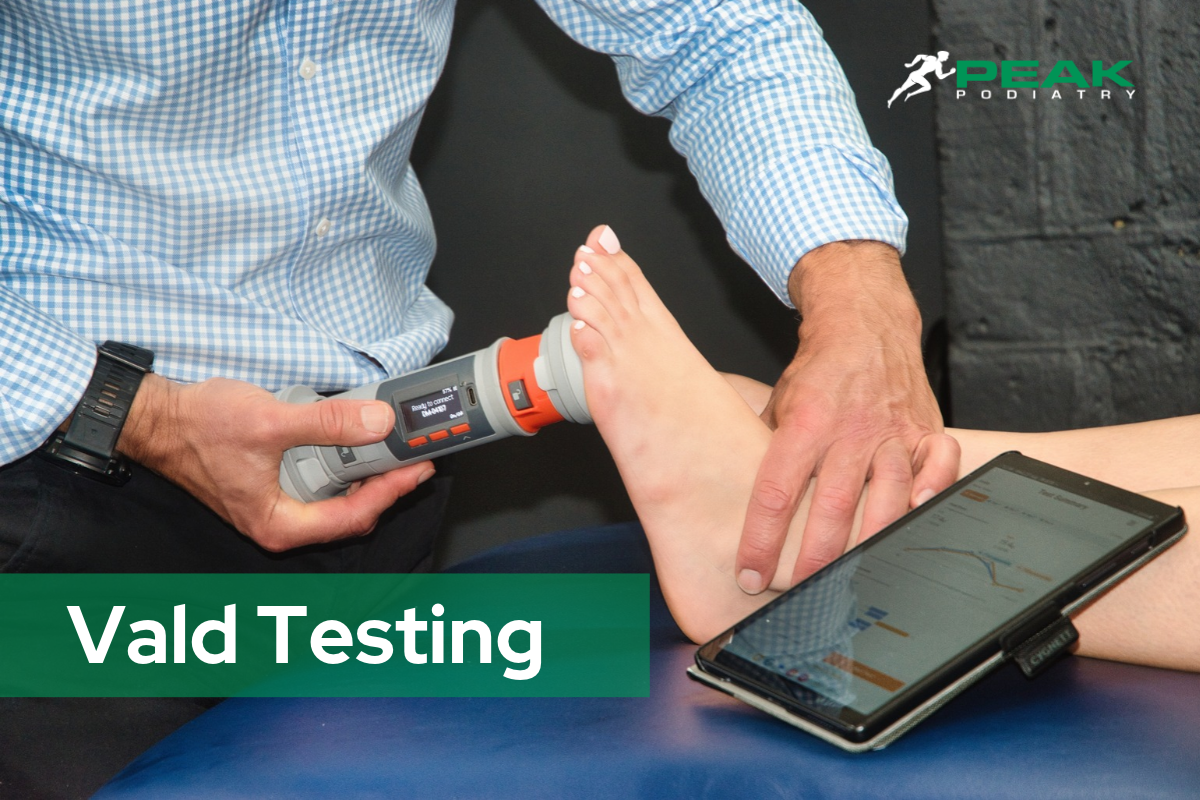
A foot assessment examines structure — arch type, joint mobility, muscle strength, footwear interaction, and load tolerance. It helps answer questions like: Is your big toe moving efficiently? Is your arch absorbing force effectively? Are your calf muscles supporting you properly?
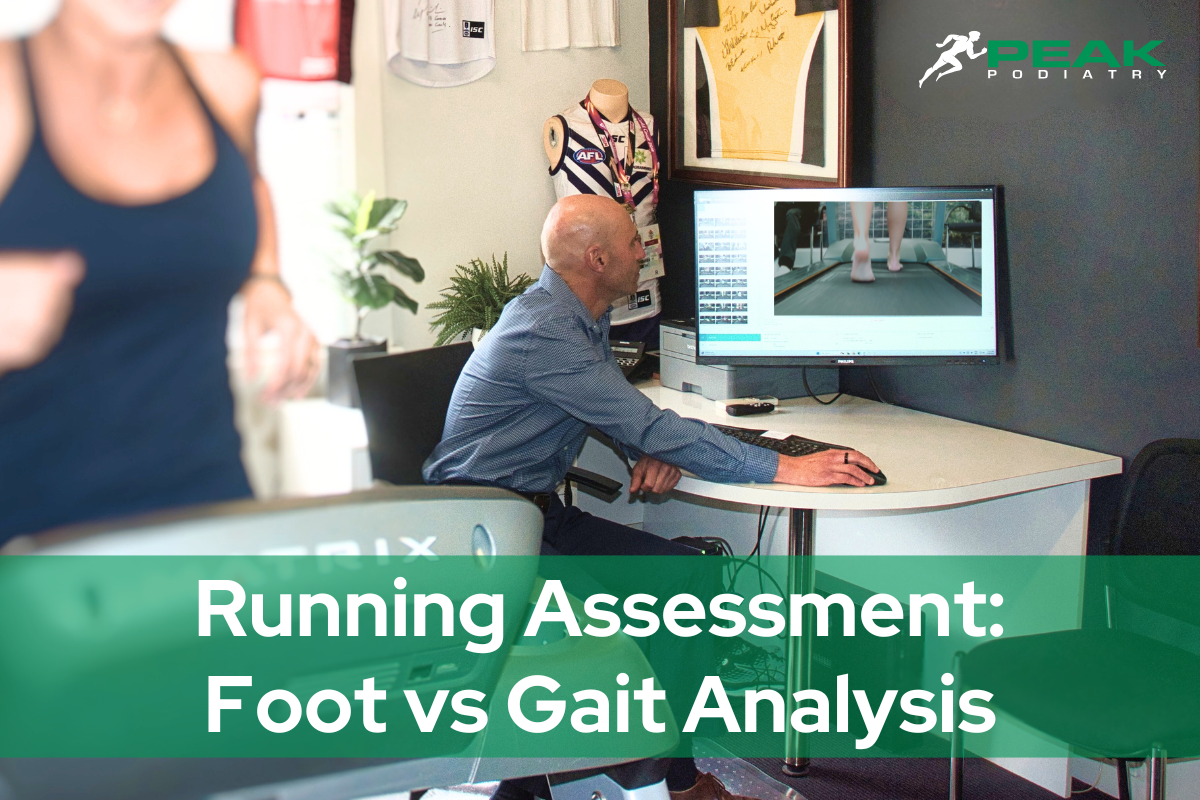
A gait analysis looks at movement in action. Using our high-speed cameras and advanced gait analysis systems at Peak Podiatry, we assess stride length, cadence, ground contact time, limb symmetry, knee alignment, pelvic control, and trunk stability. Research shows that increasing cadence by just 5–7% can reduce joint loading at the knee and hip by up to 20%. Small adjustments can make a big difference — often meaning fewer niggles and more comfortable kilometres.
It’s Not Just About Your Feet
Many runners are surprised to learn that we don’t stop at the ankle. Your knee position influences your foot. Your hip strength influences your knee. Your trunk control influences your hip. It’s all connected.
- Weak glutes? The knee may drift.
- Limited hip extension? The calf may take on extra load.
- Reduced big toe mobility? The plantar fascia may feel the impact.
Research suggests that poor hip control can increase lower limb injury risk by up to 40%. That’s why we assess the entire lower limb chain and how your trunk contributes to efficient force transfer throughout the body.
Why It Matters
A running assessment at Peak Podiatry isn’t about labelling you as a “pronator” or recommending the latest flashy shoe. It’s about understanding your movement and helping you run stronger, longer, and with less discomfort. Whether you’re training for your first 5km, tackling the Busselton Ironman, or simply keeping up with the kids, the goal is the same: efficient movement and reduced injury risk.
And the bonus? Watching your own slow-motion footage can be surprisingly fun. You might discover you have the stride of a gazelle… or a slightly enthusiastic baby giraffe. Either way, we’ll help you turn it into your most efficient run yet.